Primer registro de piebaldismo en Corynorhinus townsendii y ocurrencia masiva de coloración atípica en murciélagos cavernícolas en el norte de México
Coloración atípica en murciélagos de cuevas
DOI:
https://doi.org/10.12933/therya_notes-25-235Palabras clave:
Albinismo, alteración cromática, Coahuila, Molossidae, Nuevo León, piebaldismo, VespertillionidaeResumen
Los trastornos cromáticos son pigmentaciones fenotípicamente aberrantes en la piel, el pelaje u otras partes del sistema tegumentario. Se necesita más investigación para comprender la prevalencia, las causas y las consecuencias de la coloración atípica en mamíferos. En los murciélagos, se han registrado anomalías cromáticas a nivel mundial, pero regiones como el norte de México siguen estando subrepresentadas o carecen de datos en absoluto. Para explorar la ecología de la coloración atípica en murciélagos, registramos el número de murciélagos que la presentan y evaluamos su prevalencia mediante la captura con redes de niebla. Además, como información complementaria, se registró el número de murciélagos detectados en cada cueva con cámara infrarroja. Este estudio se realizó en dos cuevas: la Cueva de Santa Catarina en Nuevo León y la Cueva de Múzquiz en Coahuila, México. Se registró la prevalencia de coloración atípica, el sexo, la etapa reproductiva y la edad de todos los murciélagos capturados. En este estudio se reportan altos niveles de ocurrencia de Tadarida brasiliensis con coloración atípica, así como el primer reporte de piebaldismo en Corynorhinus townsendii. La prevalencia de coloración atípica como collar blanco en T. brasiliensis en la cueva de Santa Catarina varió del 0 % en agosto de 2023 al 86.46 % en mayo de 2024. En la cueva de Múzquiz, la prevalencia de coloración atípica fue del 0.17 % entre el 13 y el 14 de diciembre de 2024, con un solo murciélago. Hasta donde sabemos, este es el primer estudio que reporta una ocurrencia masiva de coloración atípica que incorpora datos de composición de la población sobre murciélagos con patrones de coloración atípicos en Latinoamérica, incluyendo una estimación del número de murciélagos en las cuevas además de la prevalencia de la coloración atípica. Proponemos que los próximos pasos para los estudios sobre coloración atípica en murciélagos deben registrar la mayor cantidad de datos posible cuando se detecten estos casos, incluyendo al menos datos sobre su edad, etapa reproductiva y comportamiento.
Descargas
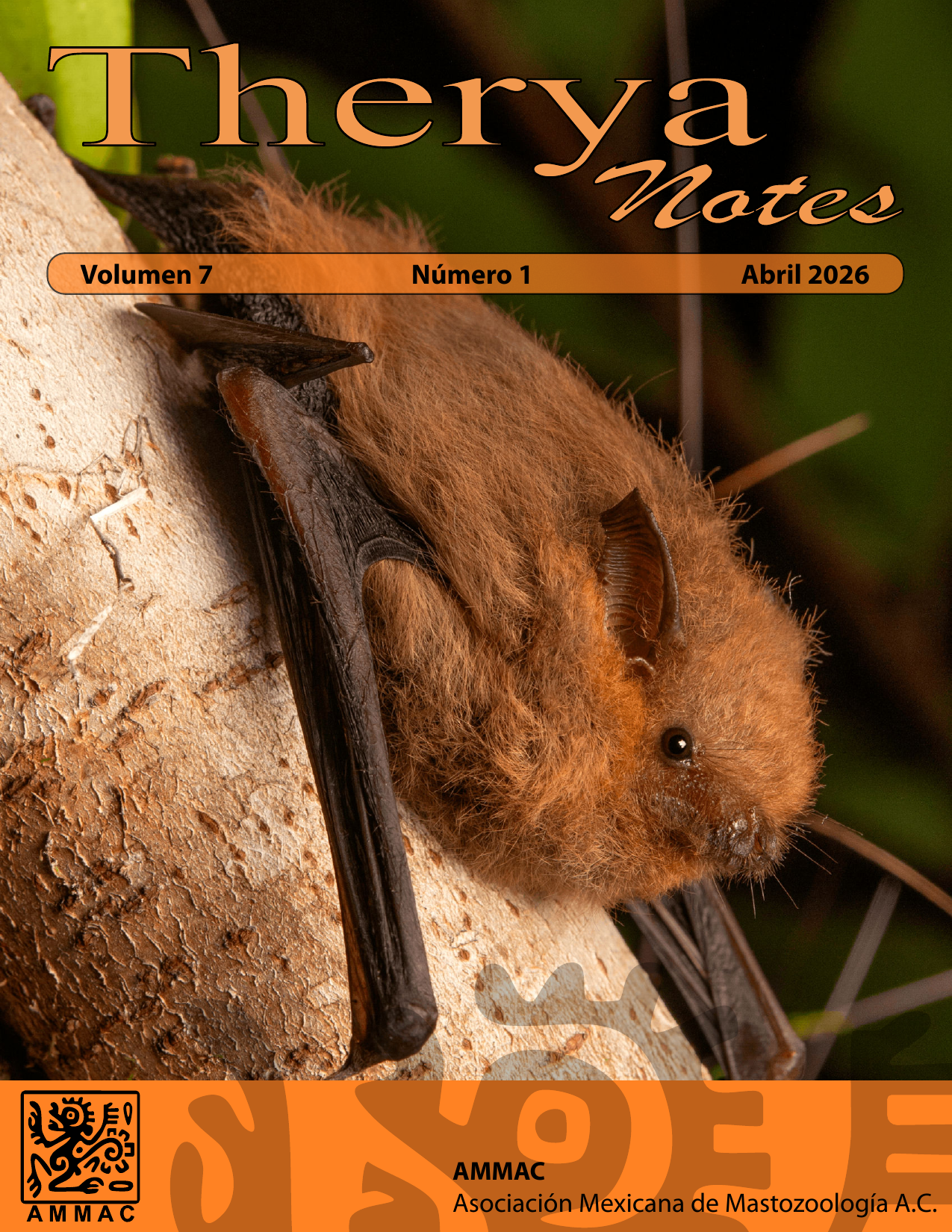
Descargas
Publicado
Cómo citar
Número
Sección
Licencia
Derechos de autor 2026 Therya Notes

Esta obra está bajo una licencia internacional Creative Commons Atribución-NoComercial-SinDerivadas 4.0.
La revista THERYA NOTES, con base en su política de acceso abierto, permite descargar en forma gratuita el contenido completo de la revista en formato digital. También autoriza al autor a colocar el artículo en el formato publicado por la revista en su sitio web personal, o en un repositorio de acceso abierto, distribuir copias del artículo publicado en formato electrónico o impreso a quien él considere conveniente, y reutilizar parte o la totalidad del artículo en sus artículos o libros futuros, dando los créditos correspondientes. Se utiliza la licencia Creative Commons CC BY-NC-SD.