Mammal diversity in a fragmented forest in the Alto Mayo River basin, San Martín, Peru
DOI:
https://doi.org/10.12933/therya_notes-25-242Keywords:
anthropogenic impact, Callicebus oenanthe, conservation, fragmentation, Tónchima RiverAbstract
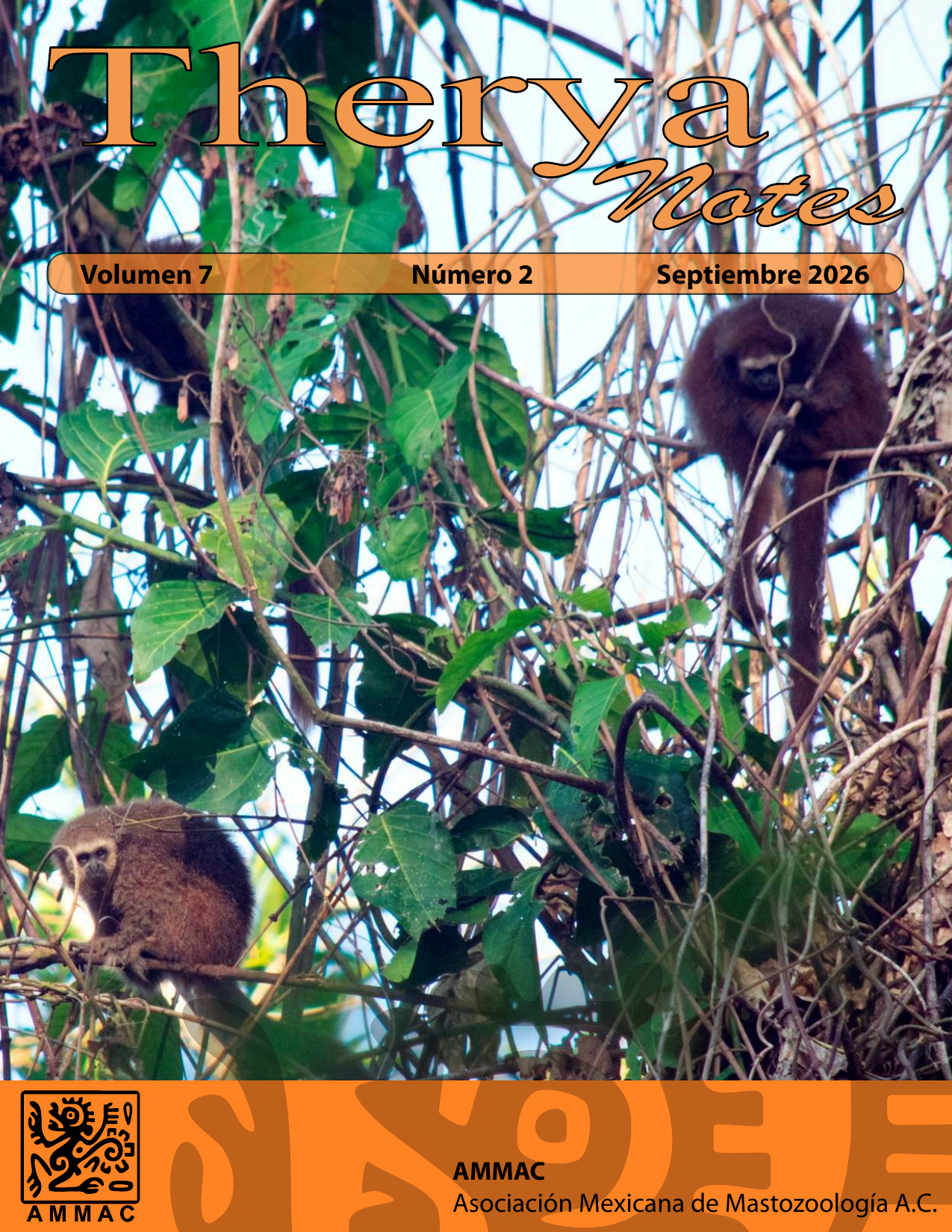
The forest in the Alto Mayo River basin, located in the department of San Martín, has undergone rapid conversion from forest to agricultural areas. Due to limited understanding of the effects of these anthropogenic changes on mammal diversity, we propose a rapid assessment of their impacts. We employed a combination of standard capture methods (1,340 traps/night), acoustic detection (5 hours/detector), direct observations (5 hours/observation), and free interviews (5 hours/interview). The degree of anthropogenic disturbance in the study area (1.7Km2) was assessed using the modified Leopold matrix, considering the conservation status of forest fragments across three levels of disturbance (low, moderate, and high). Our findings revealed that the study area, although having a moderate impact, hosts a highly diverse mammal community comprising 29 species (2 marsupials, 2 primates, 7 rodents, 1 lagomorph, 15 bats, and 2 carnivores). This diversity includes two endemic species for Peru, the cricetid rodent Rhipidomys modicus and the primate Callicebus oenanthe, and four new bat records for the department of San Martín identified by bioacoustic methods. The fragmented forests of the Alto Mayo River basin are dominated by a high diversity of small and medium-sized mammals. We suggest developing conservation plans to mitigate the loss of these species by integrating them into educational and cultural objectives to promote regional identity and increase environmental awareness.
Downloads
Published
How to Cite
Issue
Section
License
Copyright (c) 2026 Therya Notes

This work is licensed under a Creative Commons Attribution-NonCommercial-NoDerivatives 4.0 International License.
THERYA NOTES is based on its open access policy allowing free download of the complete contents of the magazine in digital format. It also authorizes the author to place the article in the format published by the magazine on your personal website, or in an open access repository, distribute copies of the article published in electronic or printed format that the author deems appropriate, and reuse part or whole article in own articles or future books, giving the corresponding credits. The Creative Commons CC BY-NC-SD license is used.