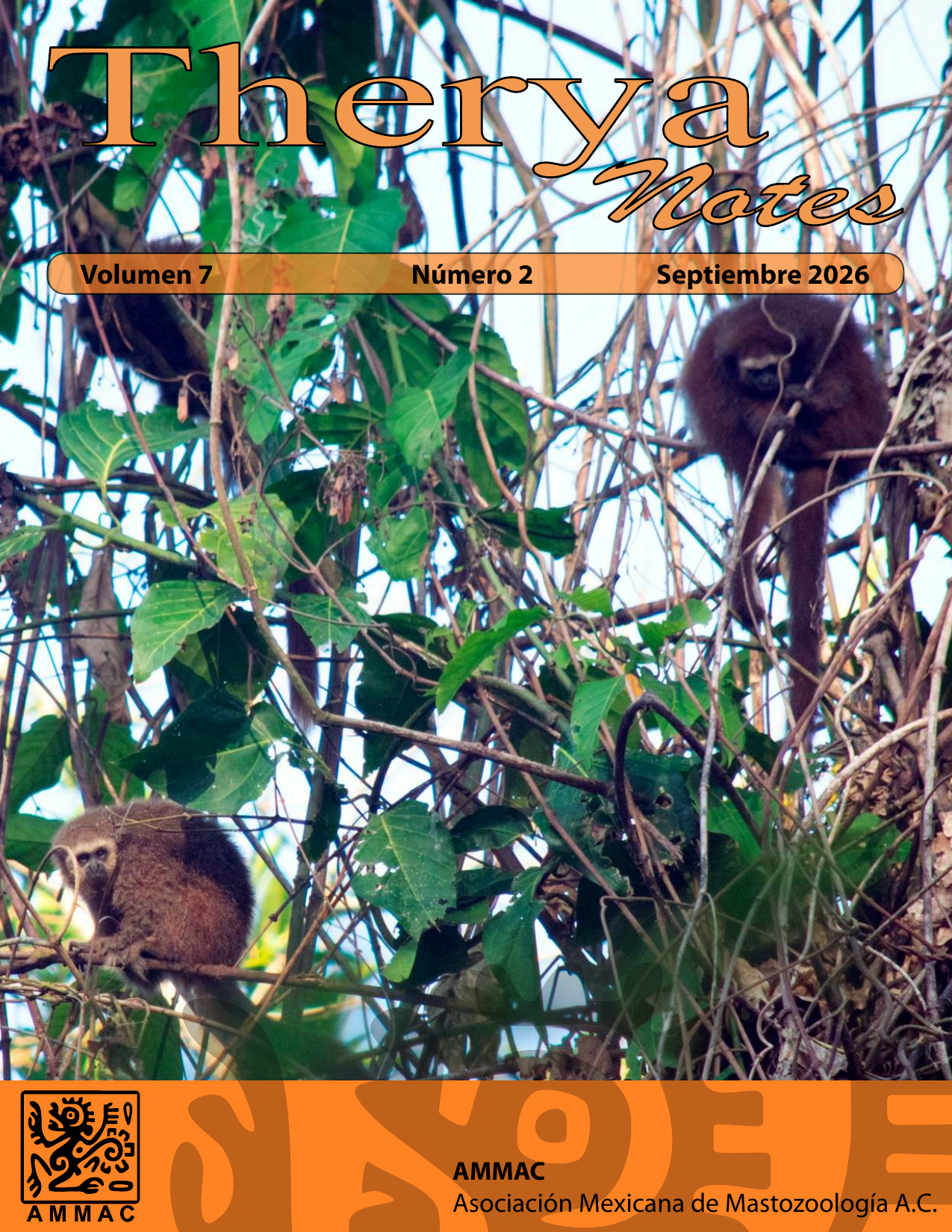
First record of a Tamandua mexicana (Pilosa: Myrmecophagidae) specimen with six cervical vertebrae
DOI:
https://doi.org/10.12933/therya_notes-25-241Keywords:
comparative anatomy, axial morphology, northern Tamandua, Xenarthra, cervical variationAbstract
Mammals generally exhibit seven cervical vertebrae, therefore numerical variations are rare and, in most cases, associated with developmental abnormalities. This study reports the first confirmed case of a Tamandua mexicana specimen exhibiting only six cervical vertebrae, providing novel morphological and radiological insights into the family Myrmecophagidae. A juvenile T. mexicana specimen, housed in the Museum Collection of the Facultad de Estudios Superiores Cuautitlán (registry DGVS-CC-344-Mex/24), was examined prior to preservation using the phenolic glycerin technique. Morphometric data and digital radiographs were obtained, and the identification of cervical vertebrae was performed using anatomical criteria established by the Nómina Anatomica Veterinaria. Radiographic examination revealed six cervical vertebrae (C1–C6) with a direct transition to the first thoracic vertebra (T1), without evidence of transitional elements, anomalous fusions, or radiographic signs of trauma or pathological changes. The persistence of open growth plates in the long bones indicated active epiphyseal growth, confirming the juvenile status of the specimen.This case represents the first documented occurrence of cervical numerical variation within Myrmecophagidae, supporting the hypothesis that species with slow metabolic rates may display a higher degree of axial skeletal flexibility. The close phylogenetic relationship between T. mexicana and sloths strengthens this association. A systematic survey of osteological and preserved xenarthran specimens, as well as live individuals, is recommended to determine the frequency and origins of this condition.
Downloads
Published
How to Cite
Issue
Section
License
Copyright (c) 2026 Therya Notes

This work is licensed under a Creative Commons Attribution-NonCommercial-NoDerivatives 4.0 International License.
THERYA NOTES is based on its open access policy allowing free download of the complete contents of the magazine in digital format. It also authorizes the author to place the article in the format published by the magazine on your personal website, or in an open access repository, distribute copies of the article published in electronic or printed format that the author deems appropriate, and reuse part or whole article in own articles or future books, giving the corresponding credits. The Creative Commons CC BY-NC-SD license is used.