THERYA NOTES 2026, Vol. 7:38-44
An unusual ocelot–opossum co-occurrence
in the Chiquitano dry forest, Bolivia
Coocurrencia inusual entre Ocelote y Zarigüeya
en el Bosque Seco Chiquitano, Bolivia
Paola Nogales-Ascarrunz1*, Celine Jordan2, Maya Beukes2, Gabriel Aramayo Ledezma3, Jose Luis Aramayo-Bejarano3,4, and Martin Jansen 2, 3
1Programa de investigación félidos Bolivia, Edificio Torre 1021, Calle Enrique Peñaranda, San Miguel, La Paz, Bolivia, E-mail: paonogales@gmail.com (PNA)
2Senckenberg Research Institute and Nature Museum, Terrestrial Zoology, Frankfurt am Main, Germany, E-mail: celine.jordan@senckenberg.de (CJ); maya.beukes@senckenberg.de (MB); martin.jansen@senckenberg.de (MJ)
3Centro de Investigaciones Ecológicas Chiquitos . E-mail: gabriel.aramayo.ledezma@hotmail.com (GAL)
4Universidad Autónoma Gabriel René Moreno (UAGRM), Museo de Historia Natural Noel Kempff Mercado (MHN-NKM), Área de Invertebrados, Av. Irala 656, Santa Cruz de la Sierra, Bolivia. E-mail: josearamayo@uagrm.edu.bo (JLAB).
*Corresponding author
Interspecific interactions among carnivores and their prey are rarely documented beyond classical predation or competition events. Recently, camera traps revealed an unusual spatial and temporal co-occurrence between ocelot (Leopardus pardalis) and common opossum (Didelphis marsupialis) in the Amazonian forest of Perú. Here, we report the first record of this co-occurrence in the Chiquitano dry forest of Bolivia, extending the known ecological context of this observation beyond the Amazonian ecosystem. The record was obtained as part of a long-term camera trap monitoring project carried out since 2017 in the Chiquitano dry forest. The project has 25 stations and spans across 23,025 ha, operating continuously, independent detections were defined using 60-minute intervals. On June 23rd, 2024, one camera trap station recorded the only co-occurrence between an ocelot and a common opossum detected among around 700 independent records of both species. This rare record highlights an unusual spatial and temporal co-occurrence between an ocelot and a common opossum and highlights the importance of long-term camera trap monitoring for documenting uncommon natural history events. Further studies are needed to determine how often and under what conditions such interactions occur and in which ecosystems. This record documents for the first time a spatial and temporal co-ocurrence between and ocelot and a common opossum in the Chiquitano dry forest of Bolivia, extending the geographic range of previous reports from the Peruvian Amazon.
Key words: Interspecific interactions, Monitoring, Ethology, Camera Trap, Predator-Prey interactions
Las interacciones interespecíficas entre carnívoros y sus presas rara vez son documentadas más allá de los eventos clásicos de depredación o competencia. Recientemente, el uso de cámaras trampa reveló la coocurrencia espacial y temporal inusual entre el ocelote (Leopardus pardalis) y la zarigüeya común (Didelphis marsupialis) en la Amazonía del Perú. En este estudio, reportamos el primer registro de esta coocurrencia en el Bosque Seco Chiquitano de Bolivia, ampliando el contexto ecológico conocido de esta observación más allá del ecosistema amazónico. El registro se obtuvo como parte de un proyecto de monitoreo a largo plazo con cámaras trampa realizado desde el 2017 en el bosque seco chiquitano. El proyecto cuenta con 25 estaciones distribuidas en 23,025 ha, operando continuamente. Las detecciones independientes se definieron usando intervalos de 60 minutos. El 23 de junio de 2024, una cámara trampa registró la única co-ocurrencia entre un ocelote y una zarigueya común entre 703 registros independientes de ambas especies. Este registro poco común destaca una coocurrencia espacial y temporal inusual entre un ocelote y una zarigüeya común, y resalta la importancia de los monitoreos a largo plazo mediante cámaras trampa para documentar eventos poco frecuentes de historia natural. Se requieren estudios adicionales para determinar con qué frecuencia y bajo qué condiciones ocurren estas coocurrencias, así como en qué ecosistemas. Este registro documenta por primera vez un co-ocurrencia espacial y temporal entre un ocelote y una zarigüeya en el bosque seco Chiquitano de Bolivia, ampliando el alcance geográfico de reportes previos en la Amazonía peruana.
Palabras clave: Interacciones interspecificas, Monitoreo, Etología, Camaras trampa, Interacciones Predador-Presa
© 2026 Asociación Mexicana de Mastozoología, www.mastozoologiamexicana.org
Interspecific interactions in wildlife that do not result in direct predation or competition remain understudied despite the extensive literature on predator-prey relationships (Smith et al. 2020). However, the growing use of non-invasive camera traps in mammal studies has significantly enhanced the ability of researchers to collect data from wildlife interactions that are difficult to observe directly (Smith et al. 2020). Especially related to Neotropical felids, which are typically elusive, cryptic and typically solitary (Castello 2020).
Among Neotropical felids, the ocelot (Leopardus pardalis) is one of the most common felid species in tropical and subtropical habitats (Paviolo et al. 2015). Its range extends from southern Texas in the United States through Mexico and Central America to northern Argentina (Magalhães and Srbek-Araujo 2022) and occupies a wide variety of ecosystems, including tropical forests, savannas, and shrublands (Paviolo et al. 2015). Although numerous ecological studies exist (e.g. Massara et al. 2016; Flores-Martínez et al. 2022), research on interspecific interactions between ocelots and other mammals has primarily focused on their role as predators. For example, ocelots have been recorded preying on agoutis (Aliaga-Rossel et al. 2006), bats and amphibians, and exhibiting hunting strategies such as stalking and ambushing prey (Macas-Pogo et al. 2023). In addition to their role as predators, competitive interactions with other carnivores, such as foxes have also been documented (Bolze et al. 2019). Notably, most of these insights into both predatory and competitive behaviour have largely relied on data from camera traps.
Rare and less conventional interspecific associations involving ocelots and other mammals are beginning to be documented. Recently, an unusual interspecific interaction was recorded using camera traps, where a single ocelot and a common opossum (Didelphis marsupialis) were observed moving in proximity across multiple independent records (Camerlenghi et al. 2025). However, this interaction has so far only been reported in the lowland Amazonian forest of Peru, and its broader occurrence across other ecosystems remains unknown.
The common opossum, involved in this observed association with ocelots, is one of the most widespread marsupial species in the Neotropics, ranging from Mexico to Bolivia and demonstrates a high tolerance for habitat modification (Astúa et al. 2021). Ecologically, it is an omnivorous, generalist and opportunistic forager with a broad dietary spectrum that includes insects, small vertebrates, fruit, and carrion (Cruz-Salazar et al. 2016). Beyond the documented interaction between the common opossum and the ocelot (Camerlenghi et al. 2025), the extent and nature of such associations are still under investigation.
Here, we expand upon these sparse observations by documenting for the first time in the ecosystem of the Chiquitano dry forest, an unusual spatial and temporal co-ocurrence between an ocelot and a common opossum, in which no defensive behaviors were observed. This record expands the known geographic range of this unusual co-occurrence beyond the Amazonian forest and raises the possibility for broader behavioural associations between the two species.
The observation was made in the Chiquitano dry forest, an endangered ecoregion located in eastern Bolivia’s Precambrian Shield, representing a transitional zone between moist and dry forest ecosystems (Jansen et al. 2020). Situated at an altitude of approximately 500 m above sea level, the region experiences a mean daily temperature of ~24.4 °C and an annual precipitation of approximately 1,200 mm (Killen et al. 2006).
Each year, this ecosystem faces increasing threats from uncontrolled fires and land-use conversion driven by agro-industrial expansion (Meißner et al. 2024), making it one of the most threatened ecosystems in the Neotropics. Despite these pressures, the Chiquitano dry forest the ocelot shares its habitat with other sympatric felids, including the jaguar (Panthera onca), puma (Puma concolor), margay (Leopardus wiedii), jaguarundi (Herpailurus yagouaroundi), pantanal cat (Leopardus braccatus), and Geoffroy’s cat (Leopardus geoffroyi) (Nogales-Ascarrunz et al. 2024).
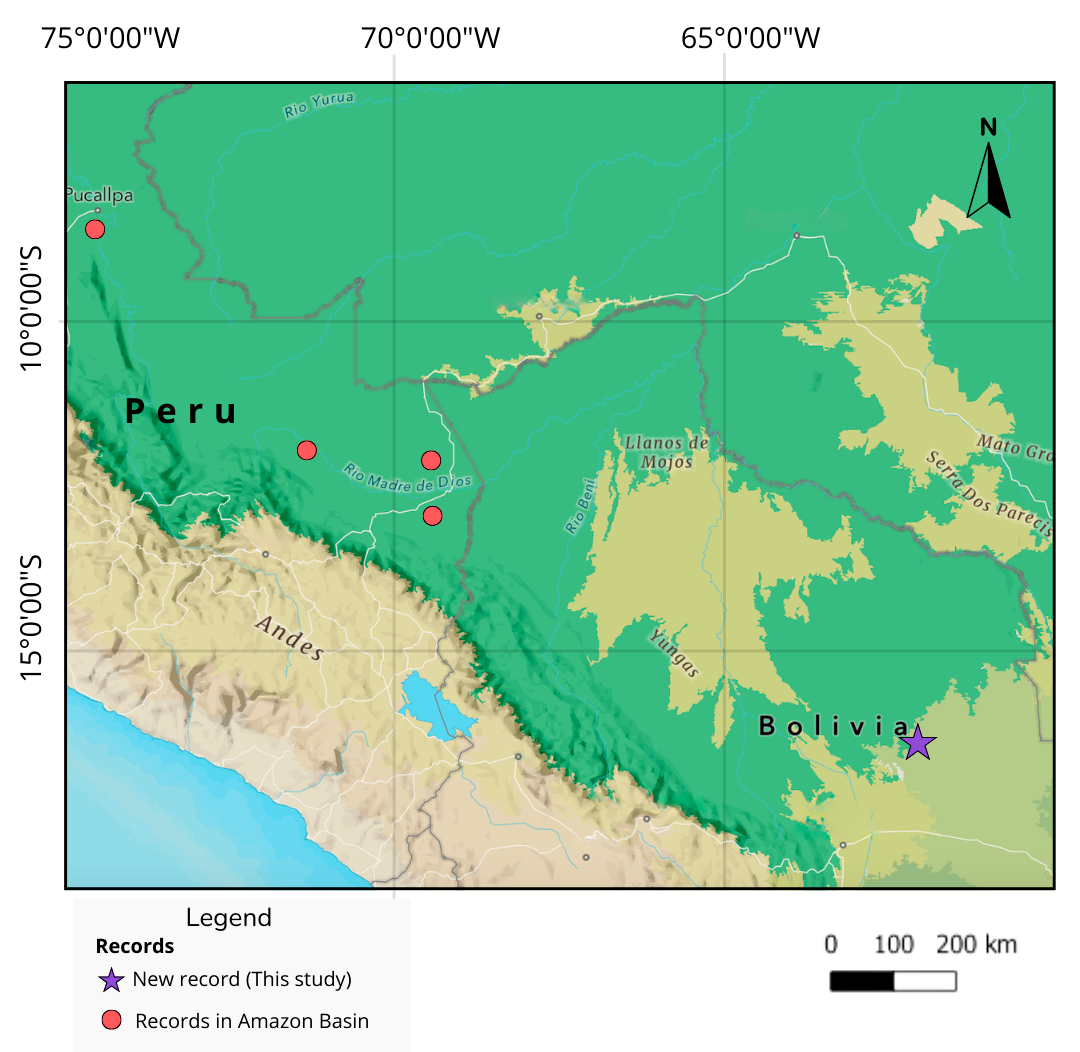
Camera trapping was conducted at the Centro de Investigaciones Ecológicas Chiquitos (CIEC) (Figure 1), where a long-term biomonitoring project was initiated in 2017. Initially comprising 13 camera trap stations and expanded in 2023 to 25 stations, covering approximately 23,025 hectares (Jansen et al. 2024). The stations were spaced at intervals of roughly 3 km2 to maximize spatial independence; each station was equipped with paired camera traps (Meißner et al. 2024). Cameras were programmed to operate 24 hours per day with motion-trigger mode enabled and minimal lag between successive triggers. The dataset analyzed here spans from March 2017 to June 2025.
For data analysis, we applied a 60-minute camera trap interval to define independent detections (Smith et al. 2023). The lunar moon phase of the register was classified using the lunar.phase function in the lunar package in R (Lazaridis 2022). To evaluate temporal overlap between the species, the detection times were converted to decimal hours and used to estimate kernel density activity patterns over a 24-hour cycle. Temporal overlap was quantified using the coefficient of overlap (Δ; Ross et al. 2013), within 95 % confidence intervals obtained via bootstrap resampling (1,000 iterations). Analyses were conducted in R, and activity patterns were visualised using circular kernel density plots with the overlap (Meredith et al. 2023) and circular (Agostinelli and Lund 2017) packages. Activity patterns were visualised using circular kernel density plots.
Across the entire sampling period, the cameras recorded 471 independent detections of ocelots (1000 images) and 232 of common opossum (561 images). On 23rd June 2024, at 00:21:34 hr, during the waxing gibbous lunar phase, a camera trap (model: Reconyx XR6 UltraFire; coordinates: 16°22’48” S, 62°02’07” W) captured the unusual event of an ocelot and a common opossum walking one after the other (Figure 2). Although slightly blurred, the opossum is identified as D. marsupialis based on diagnostic features, including the body shape, the coloration of its limbs and ears, which distinguish it from the similar-looking D. albiventris (Rocha and Rumiz 2019). This station is located at a rocky cascade that forms small natural pools, frequently used by wildlife as water sources, resting areas, or shelter, which may have contributed to the likelihood of such an encounter. A visual screening of the entire camera-trap dataset did not reveal any additional records of simultaneous co-ocurrence between the species, indicating that this event represents a rare observation within the study period.
Interestingly, the opossum did not exhibit typical defensive behaviors, such as freezing, open-mouth display, or erratic flight as described for this species (McManus 1970). Similarly, the ocelot does not display clearly identifiable predatory postures, such as crouching or stalking, in this single frame (Stanton et al. 2015; Macas-Pogo et al. 2023). Both individuals are documented in close spatial proximity, with no evident aggressive or defensive behaviors visible (Figure 2).
Beyond the single co-occurrence event, temporal activity analyses revealed a high degree of nocturnal overlap between ocelots and common opossums across the entire monitoring period (Figure 3). Both species showed a nocturnal activity, with peak activity occurring during the night. The estimated coefficient of temporal overlap was high (Δ = 0.77; 95% CI: 0.74-0.80), indicating substantial overlap in daily activity patterns. Despite this overall temporal overlap, only one instance of close spatial and temporal co-occurrence was detected, suggesting that simultaneous presence does not commonly translate into observable close encounters.
This record of an unusual ocelot-opossum co-ocurrence, in which no clear aggressive or defensive behaviors were observed, not only extends the known geographic range of the ocelot-opossum association but also highlights their apparent rarity across a large data set. Despite over 703 independent detections of both species in the study area, only a single co-occurrence was recorded. This scarcity underscores the ecological rarity of such associations. While previous documentation is limited to the Amazonian forest (Camerlenghi et al. 2025), our record from a different ecosystem, such as the Chiquitano dry forest, extends the geographic context of this interaction.
Our observation took place in the waxing gibbous phase of the moon, which coincides with three out of the four Amazonian records (Camerlenghi et al. 2025). Lunar phases have a potential influence on the nocturnal activity patterns on carnivores (Patras-Santiago et al. 2017), and in the case of the ocelot, activity may decrease during full moons, likely due to a reduction in the activity of their primary prey species, which are often moon-phobic (Botts et al. 2020). The repeated occurrence of such non-aggressive encounters during similar lunar phases suggests a possible pattern worth further investigation in ways that were previously overlooked.
Temporal activity analyses indicate that ocelots and common opossums exhibit substantial nocturnal overlap in the study area. Temporal overlap, as quantified by the coefficient Δ, reflects similarity in activity patterns but does not imply direct interaction between species (Ross et al. 2013). Although overlapping activities schedules may increase opportunities for spatial coincidence, the extreme rarity of close co-occurrence observed in this study suggests that temporal overlap alone is insufficient to explain the reported event. A complementary explanation is site-based convergence, the camera trap station is located at a rocky cascade that forms small natural pools, frequently used by wildlife as water sources, resting areas, or shelter. Such locations can act as ecological attractors, concentrating species with overlapping habitat preferences regardless of trophic role. Under such circumstances, neutral coexistence may be favored over antagonism, especially if neither species perceives immediate threat or competition. However, the multiple encounters reported by Camerlenghi et al. (2025) may indicate that these encounters are not entirely random.
An additional, though still speculative, aspect that could explain the observed opossum behavior involves parasite-mediated manipulation. Toxoplasma gondii, a protozoan parasite, is known to reduce fear responses in its rodent hosts (Yai et al. 2003), potentially making them more susceptible to predation. Although the role of T. gondii in influencing the behavior of marsupials like the common opossum is less studied, previous studies have reported that opossums can serve as hosts for this parasite (Bezerra-santos et al. 2020; Cañon Franco et al. 2013; Sanchez-Cordero et al. 2024). The possibility that T. gondii could influence the opossum’s behavior in ways that make it more susceptible to interactions with ocelots merits further exploration. However, this hypothesis does not explain the lack of predatory intent from the ocelot, and the mechanism driving these non-predatory interactions remains unclear.
Interpretation of this record is inherently constrained by its single-image nature. While body posture and relative distance hint that behavioural flexibility and context-dependent tolerance may occur between this species. For now, this finding should be viewed as an addition to the observations reported in the Amazonian forest of Perú. Future studies incorporating individual tracking and a broader set of environmental covariates will be essential to confirm and better characterise such interspecific interactions. Moreover, assessing their occurrence across other ecosystems and determining whether similar associations can involve different small felid species will provide critical insights into the ecological significance of these rare events.
Acknowledgements
We thank Miguel Antelo (San Sebastián Ranch), Eduardo Jordan (Imperio Ranch), Roger Parada (Noviquia Ranch), Dieter Terradelles (Monte Flor Ranch), Nicolas Encinas (Bello Horizonte Ranch), and Julio Flores (Escondidita Ranch) for their support. We also acknowledge funding from the Deutsche Forschungsgemeinschaft (DFG, project number 437771903). PNA works with ocelots thanks to the Conservation Nation Grant (“Conservationist Grant”).
Literature cited
Agostinelli, C. and U. Lund. 2023. R package ‘circular’: Circular Statistics (version 0.5-0). Available from CRAN.
Aliaga-Rossel, E., et al. 2006. Ocelot (Leopardus pardalis) predation on Agouti (Dasyprocta punctata). Biotropica 38:691–694.
Astúa, D., et al. 2021. Didelphis marsupialis (amended version of 2016 assessment). In: IUCN 2021. The IUCN Red List of Threatened Species. Version 2021. https://dx.doi.org/10.2305/IUCN.UK.2021-1.RLTS.T40501A197310576.en. Accessed on 17 August 2025.
Bezerra-santo, S. M., et al. 2020. Molecular detection of Toxoplasma gondii in opossums from Southeastern, Brazil. Journal of Parasitic Diseases 44:661–665.
Cañon-franco, W. A., et al. 2013. Toxoplasma gondii in small neotropical wild felids. Brazilian Journal of Veterinary Research and Animal Science 50:50–67.
Bolze, G., et al. 2019. Registro de interação antagonista entre Leopardus pardalis e Cerdocyon thous no limite sul da Mata Atlântica. Boletim Sociedade Brasileira de Mastozoologia 85:110–113.
Botts, R. T., et al. 2020. Does Moonlight increase predation risk for elusive mammals in Costa Rica? Tropical Conservation Science:13:e1940082920952405.
Camerlenghi, E., et al. 2025. Beyond predator and prey: First evidence of an association between ocelot and opossum individuals. Ecosphere 16:e70322.
Castelló, J. R. 2020. Felids and hyenas of the world: wildcats, panthers, lynx, pumas, ocelots, caracals, and relatives. Princeton University Press. New Jersey, USA.
Cruz-salazar, B., et al. 2016. Influence of the composition and structure of modified landscapes on abundance of two marsupials during the dry season. Therya 7:393–406.
Jansen, M., et al. 2020. A camera trapping survey of mammals in the mixed landscape of Bolivia’s Chiquitano region with a special focus on the jaguar. Check List 16:323–335.
Jansen, M., et al. 2024. Engaging citizen scientists in biodiversity monitoring: insights from the WildLIVE! Project. Citizen Science Theory and Practice: 9:1-16.
Killeen, T. J., et al. 2006. The Chiquitano dry forest, the transition between humid and dry forests in eastern lowland Bolivia. Pp. 214–233 in Neotropical savannas and seasonally dry forests: Plant diversity, biogeography, and conservation (T. Pennington and J. A. Ratter, eds.). CRC/Taylor & Francis. Boca Raton, USA.
Lazaridis, E. 2022. lunar: Lunar Phase & Distance, Seasons and Other Environmental Factors (version 0.2–01). Available from CRAN.
Macas-pogo, P., et al. 2023. Activity pattern and predatory behaviour of the ocelot (Leopardus pardalis) (Carnivora, Felidae) in mineral licks of the Yasuni National Park, Ecuador. Neotropical Biology and Conservation 18:1–11
Magalhães, L. M., and A. C. Srbek-araujo. 2022. Ocelot, Leopardus pardalis (Mammalia, Carnivora, Felidae), home range in the Lowland Atlantic Forest of Southeastern Brazil. Neotropical Biology and Conservation 17:229–237.
McManus, J. J. 1997. Behavior of captive opossums, Didelphis marsupialis virginiana. Americaan Midliand Naturalist 84:144–169.
Meißner, R., et al. 2024. Habitat destruction threatens jaguars in a mixed land-use region of eastern Bolivia. Oryx 58:110–120.
Meredith, M., et al. 2013. Overlap: estimates of the coefficient of overlapping for animal activity patterns. Available from CRAN.
Nogales-Ascarrunz, P., et al. 2024. Primer registro de Leopardus braccatus (Carnivora: Felidae) en el bosque seco chiquitano, Bolivia. Mammalogy notes 10:1–6
Paviolo, A., et al. 2015. Leopardus pardalis (errata version published in 2016). In: IUCN 2015. The IUCN Red List of Threatened Species 2015. https://dx.doi.org/10.2305/IUCN.UK.2015-4.RLTS.T11509A50653476.en. Accessed on 17 August 2025.
Pratas-Santiago, L. P., et al. 2017. Dodging the moon: The moon effect on activity allocation of prey in the presence of predators. Ethology 123:467–474.
Rocha, N. and D. I. Rumiz. 2019. Didelphidae. Pp. 134–171 in Distribución, Ecología y Conservación de los mamíferos medianos y grandes de Bolivia (R. Wallace, Porcel Z. and D. I. Rumiz, eds.). Centro de Ecología Difusión Simón I. Patiño. Santa Cruz de la Sierra, Bolivia.
Ross J., et al. 2013. Activity patterns and temporal avoidance by prey in response to Sunda clouded leopard predation risk. Journal of zoology 290:96–106
Sánchez-Cordero, V., et al. 2024. The family Didelphidae as a host of zoonotic pathogens. Therya Notes 5:150–156.
Stanton, L. A. 2015. A standardized ethogram for Felidae: A tool for behavioral researchers. Applied Animal Behaviour Science 173:3–16.
Smith, J. A., et al. 2020. Zooming in on mechanistic predator–prey ecology: Integrating camera traps with experimental methods to reveal the drivers of ecological interactions. Journal of Animal Ecology 89:1997–2012.
Smith, K., et al. 2023. Temporal partitioning and the potential for avoidance behaviour within South African carnivore communities. Ecology and Evolution 13:e10380.
Yai, L., et al. 2003. Seroprevalence of Neospora caninum and Toxoplasma gondii Antibodies in the South American Opossum (Didelphis marsupialis) From the City of São Paulo, Brazil. Journal of Parasitology 89:870–871.
Associate editor: José Manuel Mora Benavides
Submitted: September 03, 2025;
Reviewed: January 17, 2026
Accepted: February 03, 2026;
Published on line: March 24, 2026
DOI: 10.12933/therya_notes-25-229
ISSN 2954-3614
Figure 1. Geographic distribution of documented records of reported non-aggressive interactions between ocelots and common opossums in the Amazon (red dots; Camerlenghi et al. 2025), and the new camera-trap record reported here from the Chiquitano dry forest.
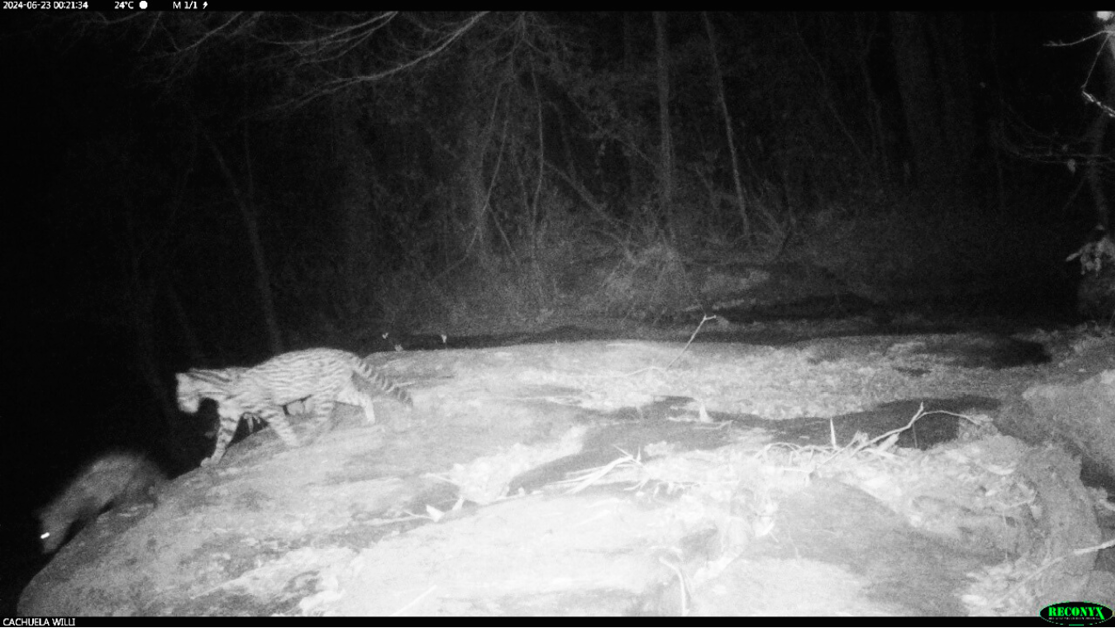
Figure 2. Camera trap image of the ocelot and the common opossum moving together in the Chiquitano dry forest.
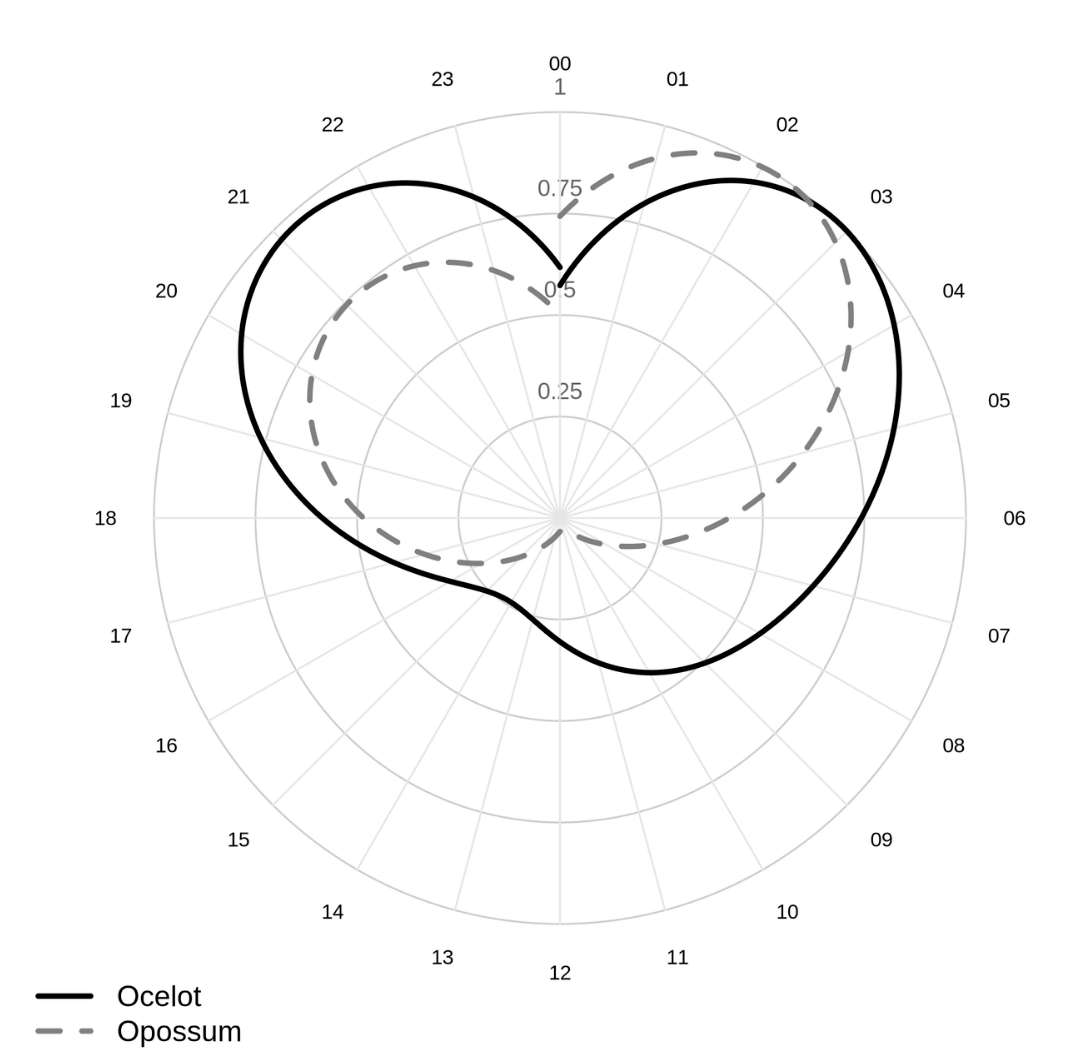
Figure 3. Circular kernel density estimates of daily activity patterns for ocelots (solid black line) and common opossums (dashed grey line) based on camera trap detections. Angles represent time day (00-23 h), and radial distance indicate relative activity intensity.